

A
Who Owns Asana?
40.0%Dustin Moskovitz
5.0%Vanguard Group
3.5%BlackRock
3.0%Baillie Gifford
2.0%State Street
46.5%Others
| Shareholder | Stake | Type |
|---|---|---|
| Dustin Moskovitz | 40.0% | Insider |
| Vanguard Group | 5.0% | Institution |
| BlackRock | 3.5% | Institution |
| Baillie Gifford | 3.0% | Institution |
| State Street | 2.0% | Institution |
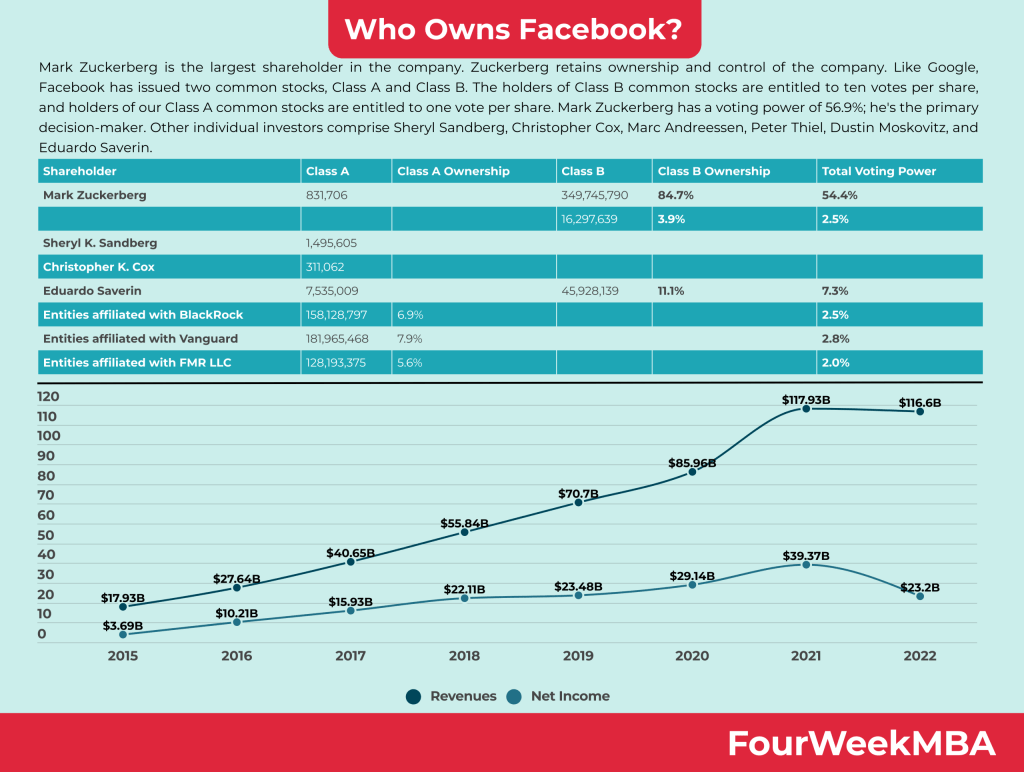
Co-founder Dustin Moskovitz (Facebook co-founder) holds ~40% of equity and controls majority voting power. ~45% institutional.
Explore In-Depth AI & Business Strategy →fourweekmba.com data card
Asana is primarily owned and controlled by its co-founders, Dustin Moskovitz and Justin Rosenstein. Other institutional investors are Champlain Investment Partners and The Vanguard Group.
| Detail | Description |
|---|---|
| Company | Asana, Inc. |
| Ownership Structure | Publicly traded company with major shareholders |
| Major Shareholders | Institutional investors like The Vanguard Group, BlackRock, Morgan Stanley, T. Rowe Price, and individual shareholders |
| Founding Date | 2008 |
| Founders | Dustin Moskovitz and Justin Rosenstein |
| Headquarters | San Francisco, California, USA |
| Primary Business | Providing work management and productivity software for teams and organizations |
| Strategic Goals | Enhancing product features with AI and automation, expanding global user base, integrating with more third-party tools, and improving enterprise solutions |
Additional Ownership Details
- Corporate Structure and Ownership: Asana, Inc. is publicly traded on the New York Stock Exchange under the ticker symbol ASAN. The company went public through a direct listing in September 2020. Asana’s ownership includes significant stakes held by institutional investors such as The Vanguard Group, BlackRock, and Morgan Stanley, as well as individual investors including co-founder Dustin Moskovitz, who is one of the largest individual shareholders.
- Corporate Strategy and Business Model: Asana’s business model focuses on providing a collaborative work management platform that helps teams organize tasks, track progress, and achieve productivity goals. The company offers a freemium pricing model, with premium features and enterprise solutions available through subscription plans. Asana aims to simplify work processes and improve team efficiency by offering intuitive and user-friendly software.
- Product Innovation and User Engagement: Asana continuously enhances its platform by introducing new features such as workflow automation, AI-driven insights, and customizable project templates. The company focuses on user engagement by offering a seamless interface, robust integration capabilities, and mobile accessibility, ensuring that users can manage their work efficiently across various devices.
- Market Expansion and Growth: Asana aims to grow its market presence by expanding into new regions and targeting a broader range of industries. The company focuses on acquiring new customers across different sectors, including technology, healthcare, finance, and education, by providing solutions tailored to industry-specific needs. Asana also invests in expanding its international operations and enhancing localized product offerings.
- Community and User-Centric Approach: Asana prioritizes user feedback and community engagement, offering resources such as training, support, and a vibrant community forum where users can share best practices and collaborate on solutions. The company is committed to delivering customer success by providing exceptional service and continually improving its platform based on user insights.
Related Tech Ownership Case Studies




Read More:


